Three years of ocular proton therapy in the Netherlands, clinical results
Rasch, Marinkovic, Pors, Kilic, Naus, Yavuzyigitoglu, Bakker, Rij, Beenakker, Bleeker, Schalenbourg, Pica, Hrbacek, Horeweg and Vu
Research Topics
Abstract
Purpose: Uveal melanoma (UM) is a rare cancer with rising number of diagnosis (143 diagnoses in 1990 to 226 in 2023) in the Netherlands. Most patients are treated locally with Ruthenium‐106 brachytherapy (±102/year). Patients were referred for proton therapy (PT) to Switzerland in the past, but PT is available in the Netherlands from January 2020 onwards. The purpose of this study is to assess the oncological and ophthalmological outcomes of the current cohort and compare with the published historic cohort.
Methods: All consecutive patients with PT for UM from January 2020 till 31st December 2023 (n = 176) and the Historic Cohort (n = 101) were treated with 4 × 15 Cobalt Gray Equivalent and were included. Time to event analyses were conducted according to the Kaplan–Meier method.
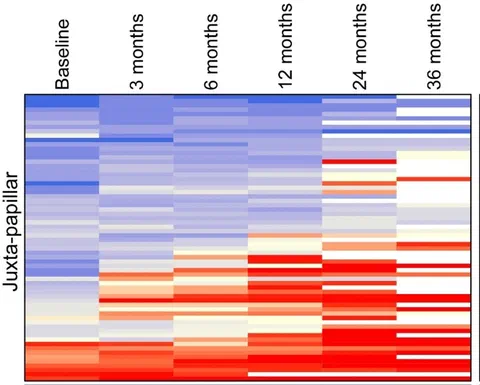
Results: The median age in the current cohort was 65 years (Historic: 59, p = 0.001). Tumour stage differed between the cohorts T1 current 10% (historic 3%), T2 21% (26%), T3 55% (36%), T4 14% (36%) (p = 0.004). Tumours regressed in 2–3 years to a remnant of around 3 mm. At 3 years, OS was 78.9% (86%), DM 26.6% (17%), LF 3.5% (6%) and enucleation rate 16.8% (19%), the latter mostly because of pain and/or retinal detachment. In both cohorts, visual acuity dropped substantially after treatment (median −0.50). At 3 years, in both cohorts, around a quarter of the patients retained a vision of ≥0.3. Retinal detachment was the most common toxicity in the current cohort with 52.3%.
Conclusions: The establishment of the HollandPTC improves access to PT for Dutch UM patients and results in additional sparing of around 40 eyes per year. Tumour regression after treatment happened gradually from 3 months to 2–3 years, often leaving a rest behind of 3–5 mm. Tumour control, eye preservation rates, and side effects are similar to the published historic cohort treated abroad.